
Sickle Cell Disease Research
and Training University of
Abuja
Sickle Cell Disease Research
and Training University of
Abuja
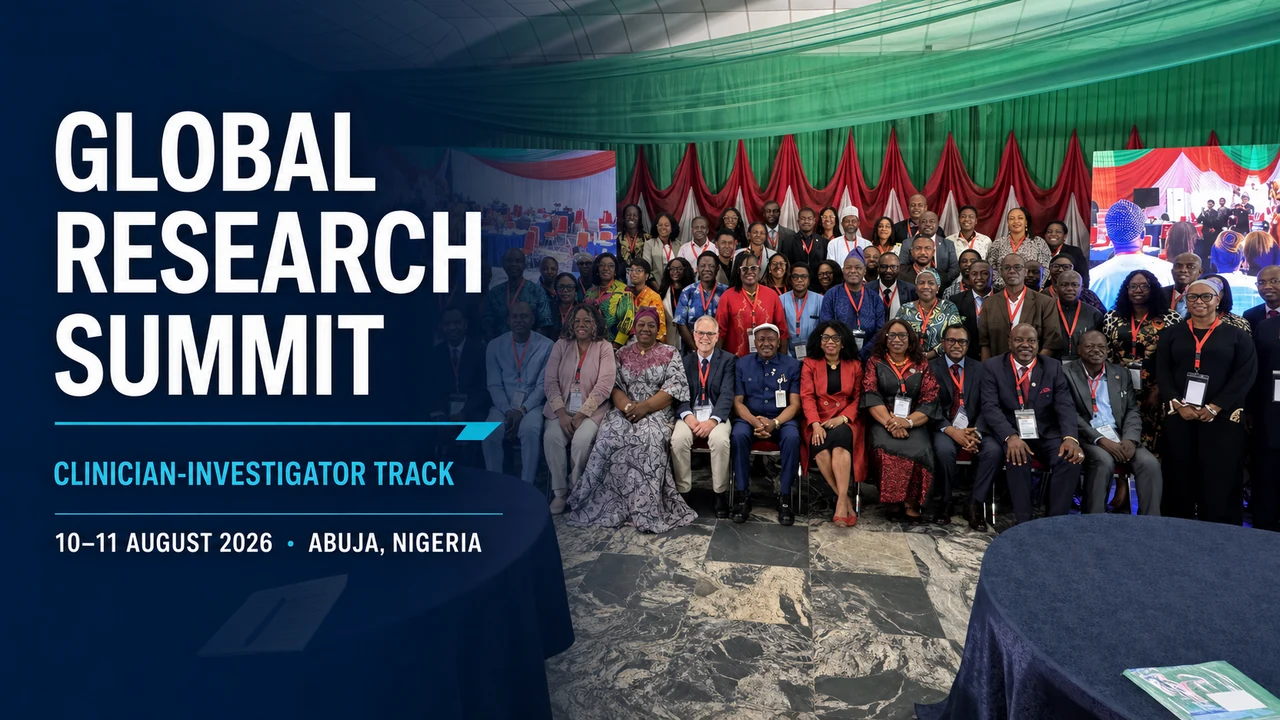
Global Research Summit/Clinician-Investigator Track
REPORT ON THE GLOBAL RESEARCH SUMMIT/CLINICIAN-INVESTIGATOR TRACK
PREAMBLE
The University of Abuja, Mayo Clinic and the iCCaRE Consortium in collaboration with Nigeria Cancer Society, West African College of Physicians, Sickle Pan-Africa Research Consortium TRAINing Grant (SPARC-TRAIN) and Federal Ministry of Health & Social Welfare, hosted the Research Capacity Building & Clinical Research Training Program themed “Building a World-Class Research Enterprise: From Proposal Development to Clinical Trial Implementation” with Global Research Summit Clinician-Investigator Track in collaboration with Nigeria Cancer themed “Developing the Next Generation of Clinician-Investigators in Global Oncology” with focus on strengthening clinical research capacity and development of researchers. There were the total of 145 physical attendance and 258 online participation over two days.
INTRODUCTION
The Vice-Chancellor, Professor Hakeem Babatunde Fawehinmi, welcomed all distinguished guests, researchers, clinicians, partners, and participants to the training Summit. He emphasized the significance of the partnership between the collaborating institutions. He noted that the gathering represented a unique convergence of leading institutions and experts, creating an important platform for strengthening research capacity in Nigeria. He highlighted the University’s commitment to becoming a world-class institution, stressing that this ambition must be demonstrated through concrete improvements in the quality of research, the capacity of clinicians and early-career investigators, access to competitive research funding, high-quality publications, and the ability to conduct internationally credible clinical trials.
He acknowledged that while Africa has many capable clinicians and researchers, there remains a need for stronger infrastructure, mentorship, and practical training to transform clinical ideas into fundable, high-quality, and internationally recognized research. He expressed confidence that the programme would contribute significantly to closing this gap.
On behalf of the Governing Council, Senate, Management, staff, and students of the University, the Vice-Chancellor welcomed participants and wished them a productive and impactful Summit after which he declared the training officially open.
The opening keynote was given by Professor Obiageli Nnodu, Director of the Centre of Excellence for Sickle Cell Disease Research and Training, University of Abuja, Director of Research and Grants, Director of Research and Grants Office, West African College of Physicians, and Contact PI Sickle Pan African Research Consortium Training grant , who stated the importance of building the next generation of clinical researchers and strengthening institutional capacity to support high-quality research. She pointed out the unique opportunity presented by the Summit, which brings together experienced investigators, early-career researchers, research administrators, international partners, and government institutions.
A major focus of her keynote was the need for researchers to acquire relevant skills, develop a strong online profile, publish their work, review existing literature, identify research gaps, join research networks, and actively seek mentorship. She encouraged young investigators to take advantage of fellowships and training opportunities, while emphasizing humility, commitment, teamwork, responsiveness, and accountability as important qualities for a successful research career.
Professor Nnodu also stressed that individual researchers cannot succeed without supportive institutional systems. She highlighted the importance of research administration, grants management, research infrastructure, governance, documentation, and institutional policies that enable researchers to effectively conduct and sustain research. She emphasized that funders assess not only the investigator but also whether the institution has the systems and credibility to manage research funding effectively. She highlighted the development of the Sickle Pan-African Research Consortium and the D43 training programme, which have supported skills development in areas including implementation science, genetic counselling, genomics, clinical trials, and multidisciplinary sickle cell disease management.
She pointed to the University of Abuja’s work in sickle cell disease research, newborn screening, implementation science, patient care, and workforce development as examples of how research training and institutional capacity can translate into real-world health impact.
Dr. Folakemi Odedina ; Professor of Hem/Onco & Mayo Clinic Comprehensive Cancer Center Enterprise Deputy Director; MCF Community Health Collaborative Scientific Director; CHERP Lab PI; iCCaRE & CaPTC Consortia Founder provided an overview of the Mayo Clinic Comprehensive Cancer Center (MCCCC) Global Oncology Program, highlighting its commitment to advancing global cancer health through sustainable, equitable, and innovative research, education, training, and implementation partnerships. She explained that, unlike programmes based primarily on individual collaborations, Mayo Clinic’s Global Oncology approach is built around consortium science.
She described a consortium as a collaborative network of institutions, researchers, healthcare professionals, advocates, and other stakeholders who bring complementary expertise and resources together to address complex health problems. She emphasized that successful consortium work requires members to leave their egos behind, work as equals, share leadership, build trust, and focus on a common goal rather than individual recognition.
Dr. Odedina explained that cancer is too complex to be effectively addressed through isolated research efforts. Consortium science allows researchers from different disciplines and countries to share infrastructure, data, expertise, and populations, thereby improving research productivity, quality, capacity building, representation, equity, and access to funding. She particularly encouraged early-career investigators to become actively involved in research consortia because of the opportunities they provide for mentorship, collaboration, training, and professional growth.
She also highlighted several MCCCC consortia and their areas of focus, including the Prostate Cancer Transatlantic Consortium (CaPTC), which focuses on the genetic and environmental causes of prostate cancer and reducing disparities among Black men; Global Bridges, which supports cancer research, training, networking, and implementation across countries; and the iCCaRE Consortium, which focuses on the science of cancer survivorship.
She concluded by emphasizing the many opportunities for collaboration with Mayo Clinic and its global oncology consortia, encouraging participants to actively engage and “plug in” to existing networks rather than working in isolation. She also highlighted the importance of strong administrative and operational support in sustaining successful research collaborations and consortia.
CLINICIANS-INVESTIGATORS TRACK
Session 1: Developing a Successful Research Career
The session focused on the key steps involved in building a successful career as a clinician-investigator. Presenters discussed the importance of combining clinical practice with research, developing strong mentorship relationships, and deliberately building a sustainable research portfolio. Participants were encouraged to identify clear career goals, seek experienced mentors, develop research skills, and establish collaborations that can support long-term career progression.
Session 2: Grant Writing Fundamentals
This session introduced participants to the fundamentals of successful grant writing. Emphasis was placed on identifying appropriate funding opportunities particularly from agencies such as NIH, NCI, Fogarty, and foundations. The presenters highlighted the importance of developing clear and compelling research questions and writing specific aims that demonstrate the significance, feasibility, and potential impact of the proposed research. The interactive workshop provided participants with an opportunity to critique specific aims and research concepts and receive practical feedback.
Session 3: Developing Competitive Research Proposals
Presentations in this session focused on the major components that make a research proposal competitive. Participants were guided on how to clearly demonstrate innovation and significance, develop a robust research strategy, and prepare realistic and well-justified budgets. The session emphasized the need for proposals to address important research gaps while demonstrating methodological strength, feasibility, and potential impact.
Session 4: Scientific Writing and Publication Strategies
This session addressed the process of converting research findings into high-quality scientific publications. Presenters discussed effective manuscript and abstract writing, appropriate journal selection, and strategies for responding constructively to peer-review comments. Participants were encouraged to view publication as an important part of research dissemination and career development, while ensuring clarity, scientific rigor, and adherence to journal requirements.
Session 5: Scientific Dissemination and Research Visibility
The final session focused on communicating research findings effectively and increasing research visibility and impact. Presenters discussed effective conference presentations, appropriate use of data visualization, and ways of demonstrating the broader impact of research. The session also addressed the responsible use of artificial intelligence in scientific writing, emphasizing that AI should support researchers while maintaining scientific integrity, transparency, accuracy, and responsible authorship practices.
PANEL DISCUSSION
The Day 1 panel concluded that Nigeria has significant but underutilized capacity for research and clinical trials. Existing institutions, researchers, consortia, professional bodies, government structures, and international partners provide a strong foundation. However, sustainable progress will require continued investment in diagnostic and laboratory infrastructure, research coordination, biobanking, early-career researcher training, multidisciplinary collaboration, patient registries, clinical trial systems, and locally relevant research protocols. One major challenge discussed was laboratory capacity and the shipment of clinical trial samples outside Nigeria. Panelists explained how consortium projects have addressed this through training, establishing biorepositories, providing appropriate equipment such as −80°C freezers, improving sample processing at sites, and developing appropriate cold-chain systems to maintain sample integrity during transportation.
The panel also addressed the issue of global visibility of African research. Participants noted that substantial research is being conducted locally but is sometimes poorly represented in internationally indexed literature. Stronger collaborations and publication in high-impact journals were identified as important mechanisms for increasing the visibility of African research, attracting collaborators, and opening opportunities for future research funding.
RESEARCH ADMINISTRATION
The Research Capacity Building & Clinical Research Training Program provided participants with practical knowledge and skills required to establish, manage, and sustain a high-quality research enterprise. The training covered the research lifecycle from proposal development and grants management to clinical trial implementation, research data management, community engagement, and institutional research leadership.
Building International Research Infrastructure
Dr. Bolajoko’s presentation focused on the foundations required to develop sustainable international research infrastructure. Key areas included research governance, multi-site research management, partnership development, and sustainability planning. The session emphasized the importance of strong institutional structures, clear governance frameworks, effective partnerships, and long-term planning in supporting successful research programs and international collaborations.
Research Administration – Pre-Award and Post-Award Management
This session focused on the administrative and financial aspects of managing research grants throughout their lifecycle. Participants were guided through proposal development, budget preparation, sponsor requirements, subaward management, financial stewardship, effort reporting, and progress reporting. The presentation emphasized the importance of compliance, accountability, proper financial management, and effective coordination between researchers, institutions, and sponsors.
NHREC and NAFDAC Roles in Clinical Trials
Dr. Badejo Paul’s presentation focused on the regulatory and ethical oversight of clinical trials in Nigeria, with particular emphasis on the roles of the National Health Research Ethics Committee (NHREC) and the National Agency for Food and Drug Administration and Control (NAFDAC).
He explained the importance of ethical and regulatory approvals before the commencement of clinical trials, highlighting the distinct but complementary responsibilities of NHREC and NAFDAC. NHREC provides oversight of the ethical conduct of health research and helps ensure the protection of research participants, while NAFDAC regulates clinical trials involving investigational medicines and related products, ensuring their safety, quality, and compliance with applicable regulatory requirements.
The session emphasized the importance of understanding and fulfilling regulatory documentation, ethical review, approvals, reporting, and ongoing compliance requirements throughout the clinical trial lifecycle. He also highlighted that it takes 60 working days for submission review by NAFDAC and the importance of having ALL the documents required for the application to be ready and submitted at the time of the application because NAFDAC will pause the application and recommence when the missing documents are submitted. He highlighted the trainings available at the NAFDAC Website for clinical trial application encouraging participants to visit the website and become familiar with the resources there.
Best Practices for Community Research Coordinators
The session highlighted the critical role of community research coordinators in connecting research teams with study participants and communities. Presenters discussed essential interpersonal and technical skills, research fundamentals, ethics training, and cultural competency. Emphasis was placed on effective communication, respect for community values, ethical conduct, and building trust to improve participant recruitment, retention, and meaningful community engagement.
Participants Retention
The presentation focused on the importance of participant retention as a critical component of successful clinical research. The presenter emphasized that recruitment alone is not sufficient; participants must be supported to remain in the study through to completion because high dropout rates can affect the reliability and quality of research findings. A key message was that retention begins at the point of informed consent. Participants should receive clear and honest information about study expectations, including the duration of visits, procedures, blood sampling, and other requirements. When expectations are accurately communicated from the beginning, participants are more likely to remain engaged.
The presenter also addressed participant burden, encouraging research teams to identify and reduce unnecessary inconveniences such as frequent hospital visits, long travel distances, repetitive questionnaires, and separate research appointments. Suggested approaches included virtual visits where appropriate, collecting information efficiently, and combining research activities with participants’ routine clinical appointments. The session further introduced retention Key Performance Indicators (KPIs), including missed visits, withdrawal rates, and participants loss to follow-up. Monitoring these indicators can help research teams identify the reasons participants disengage and develop appropriate solutions.
Research Data Management, REDCap & Research Quality
This session focused on the effective management of research data and the use of REDCap and clinical research databases. Participants were introduced to REDCap implementation, data collection and database management, data cleaning, query management, data quality assurance, and quality control procedures. The session reinforced the importance of accurate, complete, secure, and reliable data throughout the research lifecycle, as well as appropriate data governance practices.
Day Two began with a review highlighting key lessons from the previous sessions and preparing participants for the practical aspects of planning and conducting clinical trials.
Session 6: From Research Question to Clinical Trial
This session focused on translating a well-defined research question into a feasible and scientifically sound clinical trial. Dr. Ojo discussed clinical trial design and the selection of appropriate trial types, emphasizing the need to match the study design with the research question, objectives, and intended outcomes. The session also addressed site feasibility, including assessing whether a site has the infrastructure, personnel, patient population, and resources required to successfully conduct a trial. Regulatory considerations were highlighted as an essential part of trial planning, ensuring that studies meet ethical and regulatory requirements before commencement. Prof. Oladoyinbo further emphasized community engagement, noting the importance of involving communities and relevant stakeholders to build trust, improve participation, and ensure that clinical research responds to local needs.
Session 7: Conducting High-Quality Clinical Trials in Africa
This session addressed the practical requirements for implementing clinical trials to high-quality standards within the African context. Prof. Popoola discussed trial activation, including the processes required to prepare a study site for successful implementation. Emphasis was also placed on accurate and complete source documentation as a foundation for data quality, participant safety, and regulatory compliance. The session highlighted the critical responsibilities of the Principal Investigator (PI) in ensuring that trials are conducted according to the approved protocol, ethical standards, and applicable regulations. Finally, monitoring and audits were discussed as important mechanisms for maintaining trial quality, identifying problems early, ensuring compliance, and protecting the integrity of research data.
INTERACTIVE PANEL DISCUSSION
The interactive panel for day 2 focused on practical pathways into clinical trials, building research capacity, joining research consortia, regulatory requirements, and mentorship for early-career investigators. Panelists shared their personal journeys into clinical research. Participants were encouraged to join established consortia, undertake GCP and other clinical research training, and continuously build their skills.
Panelists explained that consortia are usually built around a specific research focus but can be multidisciplinary and multi-institutional. Researchers were encouraged to develop patient registries, systematically document their clinical work, present their research at conferences, network with other investigators, and demonstrate their ability to contribute meaningfully. The panel also highlighted that researchers may sometimes need to demonstrate commitment through their own resources before attracting external funding.
The panel placed strong emphasis on clinical trial documentation and compliance. Participants were reminded that proper documentation, clearly defined team responsibilities, delegation of duties, monitoring, auditing, and reporting of adverse events are essential for protecting participants and ensuring regulatory compliance.
The discussion also clarified the importance of Good Clinical Practice (GCP) and Good Manufacturing Practice (GMP). GCP was described as the framework underpinning ethical and scientifically sound clinical trials, with participant safety, rights, and well-being at its core. GMP was explained in relation to the quality and safety of investigational medicinal products used in clinical trials.
Another major concern was delays in ethical and regulatory approvals. Panelists noted that delays may result from incomplete submissions as well as capacity constraints within regulatory bodies. Researchers were advised to ensure that all required documents are complete before submission and to engage directly with the relevant regulatory officers when challenges arise. The discussion also called for stronger regulatory support, improved systems, additional staffing, and greater collaboration with Nigerian researchers in the diaspora to strengthen Nigeria’s clinical trial ecosystem.
CONCLUSION
Prof. Titus Ibekwe, Provost of the College of Health Sciences, University of Abuja, commended the organizers, partners, speakers, facilitators, and participants for convening what he described as a gathering of some of the finest minds in oncology, clinical trials, research capacity building, and healthcare. He highlighted the strong collaboration among institutions and organizations, including the University of Abuja, Mayo Clinic, iCCaRE Consortium, SPARC-TRAIN, West African College of Physicians, the Nigerian Cancer Society, the Federal Ministry of Health, and regulatory bodies.
He emphasized the significant gap in Africa’s participation in clinical research despite the continent carrying a substantial proportion of the global disease burden. He stressed that the summit must therefore translate into concrete and sustained action, extending beyond the meeting room into clinical practice, research laboratories, mentorship, and institutional collaboration.
Prof. Ibekwe identified several key priorities for moving forward:
- Strengthening mentorship: Established researchers should actively mentor and bring more early-career investigators and young researchers into clinical research.
- Building sustainable collaborations: Participants and institutions should maintain the networks established during the summit and develop multi-institutional and multi-country partnerships.
- Developing quality research: Collaboration and mentorship should lead to stronger research protocols, competitive grant proposals, and high-quality research outputs.
- Encouraging commitment among researchers: Researchers were urged to demonstrate passion, invest their time and effort, and remain committed to their research interests even when immediate benefits are not apparent.
- Establishing focused research priorities: Investigators should identify specific areas of interest and develop shared research agendas that address the realities and health-system needs of Africa.
- Promoting interdisciplinary research: He encouraged researchers from different fields to bring their expertise together, citing ongoing work in newborn screening and hearing assessment among individuals with sickle cell disease as an example of how interdisciplinary collaboration can generate new research opportunities.
- Sustaining the network: The summit should not be treated as a one-off event; communication, collaboration, mentorship, and future training should continue after participants leave.
Prof. Ibekwe reaffirmed the University of Abuja’s commitment to supporting the vision and partnerships emerging from the summit. He concluded by thanking all partners, speakers, facilitators, established investigators, and early-career researchers. He formally declared the Global Research Summit closed on behalf of the Vice Chancellor.
Sickle Cell Disease Research
and Training University of
Abuja
About us
Twitter Feeds
Copyright © 2024 CESRTA. All rights reserved.